Planning your first art exhibition is one of the most exciting milestones in an artist’s career. It is also, if you are being honest with yourself, one of the most overwhelming ones. Where do you begin? How far in advance do you need to start? What are the things that actually matter — and what can wait?
This guide walks you through every stage of the process, from the initial idea to the moment your first visitor walks through the door. Whether you are a painter, sculptor, photographer, or mixed-media artist, the core steps are the same. The goal is simple: to help you arrive at your opening night feeling prepared, not panicked.
I dream of painting and then I paint my dream.” This quote encapsulates the essence of oil painting – the ability to bring one’s deepest imaginations to life. The luminous quality of oil paints, due to their light-refracting properties, gives a glow to the artwork that seems almost alive.
Vincent Van Gogh
Step 1: Define Your Exhibition Concept
Before you book a space or print a single flyer, you need a clear concept. An exhibition is not just a collection of works on a wall — it is a curated experience with a point of view.
Ask yourself:
- What is the central theme or idea connecting my works?
- Am I showing a single series or a broader selection?
- What do I want visitors to feel, think, or take away?
Your concept does not need to be complicated. Some of the most powerful exhibitions are built around a simple, honest idea. What matters is that the works feel intentional together — that there is a reason they share the same room.
Once you have your concept, write it down in two or three sentences. This becomes your artist statement, your press text, and the foundation for every decision that follows.
Step 2: Choose the Right Time Frame
Timing matters more than most first-time exhibitors realise. Give yourself enough runway to prepare properly.
As a general guideline:
- Three to six months ahead is ideal for most solo exhibitions. This gives you time to finalise the works, secure a space, handle promotion, and manage logistics without rushing.
- Six to twelve months ahead is recommended if you are planning a larger group show, need to apply for funding, or are targeting a specific season or cultural event in your city.
Keep in mind that quality gallery spaces in cities like Stockholm book up quickly. The earlier you start looking, the more options you will have.
Step 3: Select and Prepare Your Works
Not every piece you have made belongs in this exhibition. Curating is an act of editing — and that takes courage.
When selecting works, consider:
- Coherence: Do the pieces speak to each other? Does the selection feel like a single body of work or a scattered portfolio?
- Variety: Is there enough visual rhythm — different scales, paces, tones — to keep a visitor engaged as they move through the space?
- Readiness: Are the works truly finished, or are you hoping the deadline will force you to finish them? Be honest here.
Once selected, make sure every work is properly prepared for display. This means framed or mounted correctly, wired for hanging if applicable, and documented with high-quality photographs for your press materials.
Step 4: Find and Book Your Gallery Space
This is one of the most important decisions you will make, and it deserves careful thought. The space shapes how your work is perceived. A piece that looks extraordinary in a bright, well-lit, professionally equipped gallery can look completely different in a poorly lit basement.
When evaluating a gallery space, look for:
- Natural and artificial light quality — how does the lighting affect your specific works?
- Wall space and ceiling height — do the proportions suit the scale of your pieces?
- Location and accessibility — can your target audience actually get there easily?
- Technical equipment — hanging systems, pedestals, lighting rigs
- Rental flexibility — can you rent for one week, two weeks, or a full month?
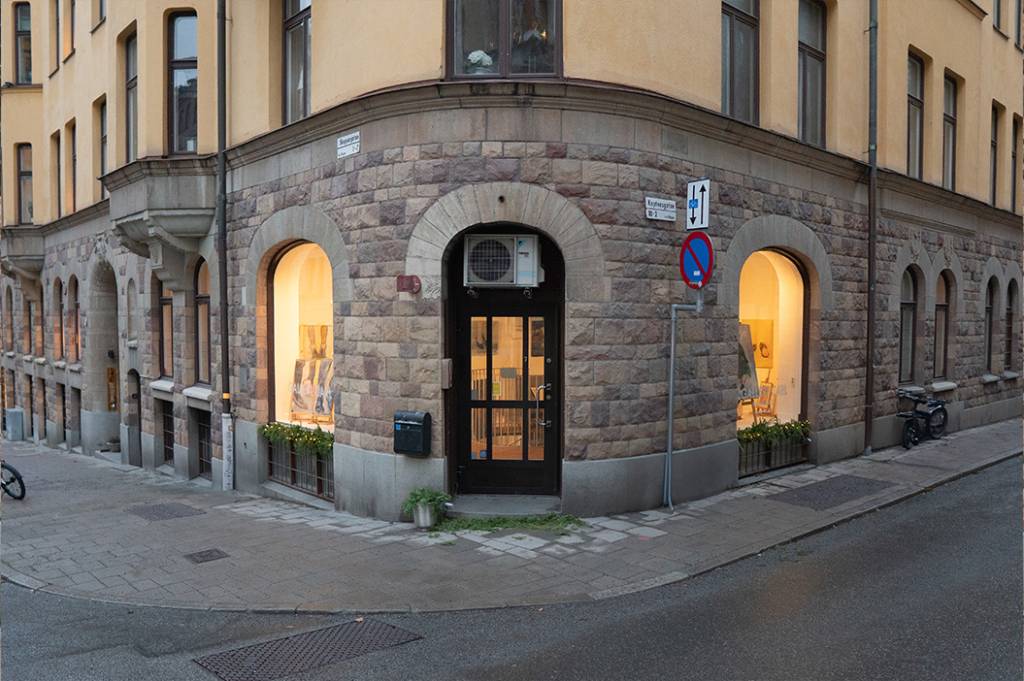
In Stockholm, there are several gallery spaces available for artist rental. Galleri Carl on Skeppargatan 7 offers 85m² of modern exhibition space with flexible rental periods from one week to one month — suitable for solo shows, group exhibitions, poetry evenings, book launches, and other creative events. If you are based in Sweden or Scandinavia and looking for a professional setting, it is worth getting in touch early to check availability.
→ Contact Galleri Carl to check availability
Step 5: Set Your Budget
Exhibitions cost money. Being clear about your budget from the start prevents unpleasant surprises later.
Typical costs to account for:
- Gallery space rental
- Framing and mounting
- Installation and lighting adjustments
- Printed materials (invitations, price lists, artist statements)
- Opening night refreshments
- Photography and documentation
- Promotion (social media, press outreach, paid ads if applicable)
Look into whether any local arts councils or cultural funds offer grants for emerging artists. In Sweden, Kulturrådet and various regional funds offer support — worth researching early in the process.
Step 6: Plan Your Installation
Hanging your work is a skill in itself. Think about the installation before you arrive at the gallery, not when you are standing there with a hammer.
Create a rough floor plan and decide:
- Which works go where, and why
- What the visitor’s natural path through the space will be
- Which piece should be seen first, and which should be the finale
- How much breathing room each work needs
If you have the opportunity to visit the space before your installation day, take it. Walk through it empty. Stand in different corners. Think about light at different times of day. The more familiar you are with the space, the more confident your installation will be.
Step 7: Write Your Exhibition Texts
Every exhibition needs a small set of written materials:
- Artist statement (2–3 paragraphs about you and your practice)
- Exhibition text (the concept in plain language — written for someone who has never seen your work before)
- Individual labels for each work (title, medium, year, dimensions, price if for sale)
Keep the language clear and accessible. Avoid jargon. Imagine explaining your work to an intelligent friend who does not have an art background.
Step 8: Promote the Exhibition
You have done the work. Now make sure people show up.
Start promoting at least four weeks before the opening. The core elements are:
- A dedicated event on social media (Instagram and Facebook are the most effective for visual artists)
- An email invitation to your existing network
- A press release sent to local arts media, blogs, and event listings
- A vernissage — an opening event on the first evening — which gives people a reason to show up on a specific date
We cover exhibition promotion in more detail in our guide on how to promote your art exhibition and attract the right audience.
Step 9: Prepare for the Opening Night
The vernissage is your public debut. It sets the tone for the entire exhibition run.
A few practical things to prepare:
- Confirm the guest list and send reminders 48 hours before
- Arrange refreshments (wine, sparkling water, something simple to eat)
- Prepare talking points about your work — visitors will ask questions, and having a few natural, rehearsed answers makes the conversation easier
- Have a sign-in sheet or a way to collect contact details from interested visitors and collectors
More on this in our guide on vernissage planning and how to make your opening night memorable.
Step 10: Document Everything
During the exhibition, document your work professionally. Good photography of your works in situ — well lit, clean, showing the space — is something you will use for years. It goes into your portfolio, your press kit, grant applications, and your next exhibition proposal.
If you can, hire a photographer for the opening night. If not, set aside time during the first day when the light is good and the space is quiet.
Final Thoughts
Your first exhibition will not be perfect. That is completely fine — it is not supposed to be. What matters is that you begin, that you learn, and that you build from the experience.
The artists who consistently get their work in front of the right audiences are not necessarily the most talented. They are the ones who show up, prepare properly, and put their work out into the world with intention.
If you are based in Stockholm or Scandinavia and looking for a professional gallery space to make your next exhibition happen, Galleri Carl is available for rental throughout the year.
Ready to Book Your Exhibition Space in Stockholm?
Galleri Carl offers 85m² of modern gallery space in the heart of Stockholm, available for rent from one week to one month. Whether you are planning a solo show, a group exhibition, a book launch, or a poetry evening — we would love to hear about your project.
Get in touch: 📧 gallericarlstockholm@gmail.com 📞 +46 70 822 66 33 🌐 gallericarl.com/contacts
Galleri Carl · Skeppargatan 7, Stockholm · Modern art gallery space for rent